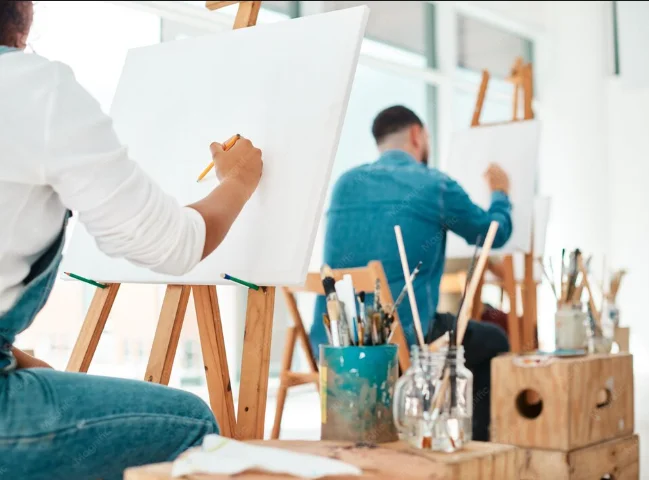
Art Education
Overview
Job Growth
N/A
Duration
N/A
Avg. Salary
N/A
Career Paths
N/A
Program Description
Art Education trains you to teach visual arts, creativity, and design to children and young people. You will study art history, drawing, painting, sculpture, design, lesson planning, classroom management, assessment, and educational psychology. The program combines studio practice with teaching methods and classroom teaching practice so you learn to design age-appropriate lessons and assess student progress. Graduates can become basic and secondary school teachers, educational administrators, curriculum developers, special education specialists, or educational consultants. This pathway helps you promote Ghanaian art and culture, develop young learners creative skills, and build a meaningful, stable career in education.
Aims & Objectives
Develop practical lesson plans and instructional materials for visual arts across primary and secondary levels.
Master classroom management techniques to create safe, inclusive, and productive learning environments.
Understand child development and learning theories relevant to art education, including special needs adaptations.
Create a professional teaching portfolio with student work samples, assessments, and reflective evaluations.
Assess and evaluate student progress using formative and summative methods and constructive feedback.
Why Choose This Program?
Hands-on practice
Strong studio work and supervised teaching practice give real classroom experience and confidence.
Good job prospects
Qualified art educators are needed in basic and secondary schools, curriculum units, NGOs, and cultural centres.
Cultural relevance
You will learn to link Ghanaian art traditions with modern teaching, supporting community and cultural projects.
Clear professional pathways
Paths include teacher certification, school leadership, curriculum development, special education, and consultancy.
Industry connections
Opportunities for internships, school attachments, partnerships with galleries, museums, and the Ghana Education Service.
Skills & Tools
Skills You'll Develop
Design sequenced art lessons using syllabus standards, backward design, learning objectives, and assessment criteria.
Apply routines, positive behaviour strategies, grouping and time management to maintain focused learning environments.
Use formative and summative assessments, rubrics, portfolios and record keeping to monitor student progress.
Integrate Google Classroom, presentation apps, digital portfolios and simple image editing tools to enhance teaching.
Develop differentiated activities, individual education plans and adaptations for learners with diverse needs.
Tools & Resources
Google Classroom or Moodle
Google Workspace or Microsoft Office
Adobe Photoshop or Krita (free alternative)
Kahoot or Socrative for assessments
Simple video editing apps
Challenges & Tips
Challenges
Balancing theory and practical studio work.
Limited access to art materials at school.
Tips & Advice
Create a weekly timetable allocating time for studio practice and study, and set small, measurable goals.
Use low-cost, local materials, recycle supplies, and plan lessons that use affordable resources.
Video Guide
Frequently Asked Questions
Ready to Apply?
Find programs that match your grades and interests - even if you haven't written WASSCE yet
Loading.. Please wait.

Talk to a Professional
Join a mentorship session with real professionals working in your field of interest.
 Real industry professionals
 Small groups (10-15 students)
 Starting at GH₵ 15 per session