Bachelor of Physiotherapy
Overview
Job Growth
N/A
Duration
N/A
Avg. Salary
N/A
Career Paths
N/A
Program Description
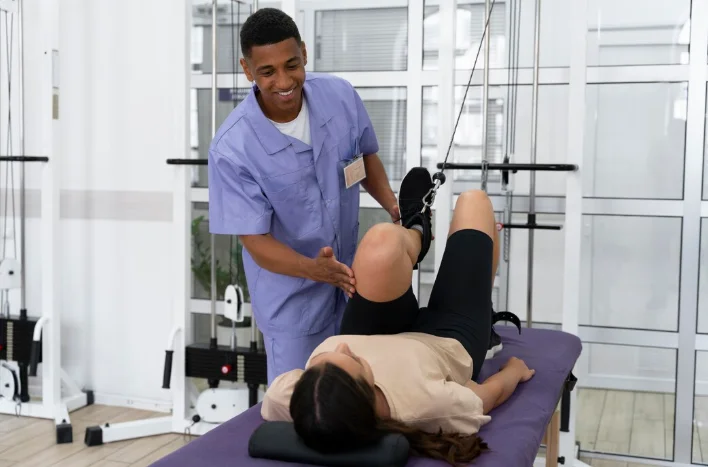
The Bachelor of Physiotherapy trains you to help people recover movement and manage pain after injury, illness, or surgery. You will study anatomy, physiology, kinesiology, therapeutic exercise, electrotherapy, clinical assessment, rehabilitation, and community health. The program combines classroom learning with hands-on practice and supervised clinical placements in hospitals and clinics. Graduates can work as registered physiotherapists in hospitals, rehabilitation centres, private clinics, sports teams, community health programmes, or continue with postgraduate specialisation. If you enjoy science, helping people, and active problem solving, this program offers practical skills and strong job prospects in Ghana and beyond.
Aims & Objectives
Develop competent clinical assessment skills to evaluate movement, strength, and functional limitations in patients.
Master design and delivery of individualized therapeutic exercise and rehabilitation plans for common musculoskeletal and neurological conditions.
Understand safe use of electrotherapy and other physiotherapy modalities, following infection control and safety protocols.
Apply professional documentation and health data management practices during clinical placements and patient care.
Why Choose This Program?
High local demand and job stability
Ghana needs more rehabilitation professionals in hospitals, community health, and sports, offering steady job opportunities after graduation.
Hands-on clinical training
Structured clinical placements and skills labs give practical experience treating real patients under supervision.
Diverse career paths
Graduates can work in public hospitals, private clinics, schools, sports teams, and community health programmes, or start private practices.
Pathway to further study and specialisation
You can pursue postgraduate training in orthopaedics, neurology, paediatrics, or sports physiotherapy for advanced roles.
Skills & Tools
Skills You'll Develop
Conduct musculoskeletal and neurological assessments, interpret findings, and create functional problem lists to guide treatment.
Design progressive exercise programmes to improve strength, mobility, balance, and endurance for individual patients.
Use modalities such as ultrasound and TENS safely and effectively, following guidelines and contraindications.
Operate and maintain therapy equipment such as treatment tables, gait trainers, splints, and assistive devices.
Tools & Resources
Electronic Medical Records (EMR) systems
physiotherapy documentation software
basic health data tools such as DHIS2
Challenges & Tips
Challenges
Heavy load of anatomy and physiology content
Balancing theory with hands-on clinical skills
Tips & Advice
Use regular short study sessions, anatomy models, and group practicals to reinforce learning.
Practice in skills labs and seek extra supervised practice during clinical placements.
Video Guide
Frequently Asked Questions
Ready to Apply?
Find programs that match your grades and interests - even if you haven't written WASSCE yet
Loading.. Please wait.

Talk to a Professional
Join a mentorship session with real professionals working in your field of interest.
 Real industry professionals
 Small groups (10-15 students)
 Starting at GH₵ 15 per session