Disability and Rehabilitation Studies
Overview
Job Growth
N/A
Duration
N/A
Avg. Salary
N/A
Career Paths
N/A
Program Description
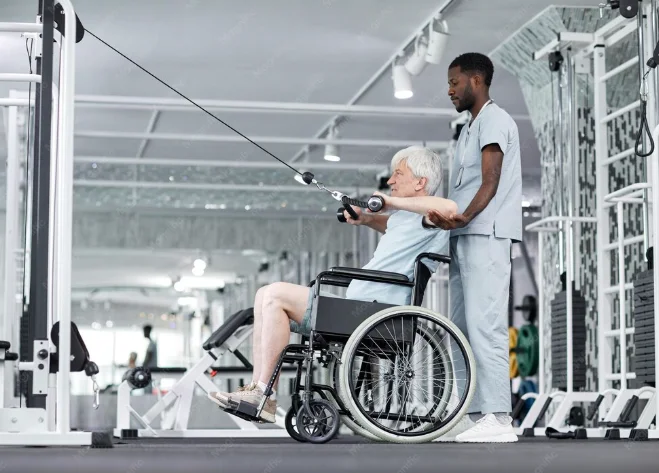
Disability and Rehabilitation Studies trains students to support people with disabilities to regain or improve daily functioning and independence. You will study anatomy, physiology, rehabilitation techniques, assistive technology, community-based rehabilitation, psychology, and basic public health. The program combines classroom theory with hands-on clinical practice, teaching patient assessment, therapeutic exercises, mobility aid fitting, and health promotion. Graduates can work as rehabilitation assistants, community disability officers, support workers in hospitals and rehabilitation centres, or continue training toward roles like physiotherapist, public health officer, or healthcare administrator. This program is practical, in demand, and rewarding for students who want to make a direct positive impact on peoples lives.
Aims & Objectives
Develop the ability to assess functional ability using standard tools and record measurable baseline and progress data.
Master basic rehabilitation techniques and assistive device fitting to improve patient mobility and independence.
Understand core anatomy, physiology, and disability-inclusive community health to inform safe care decisions.
Create and document patient-centred rehabilitation plans, monitor outcomes, and adjust interventions based on measurable results.
Why Choose This Program?
Strong job demand
Ghana needs trained rehabilitation workers in hospitals, community health services, and special schools, giving graduates good local employment prospects.
Hands-on clinical training
The program offers practical placements and lab work, so you build real clinical skills employers value from day one.
Pathways for advancement
Graduates can progress to professional programmes in physiotherapy, public health, or healthcare administration with further study.
Community impact
You will learn to work in community-based rehabilitation and outreach, directly improving quality of life for people with disabilities.
Skills & Tools
Skills You'll Develop
Use functional assessment scales, take vital signs, perform range of motion tests, and record measurable patient baselines.
Select and fit basic assistive devices such as wheelchairs, crutches, and orthotic supports, and train patients in their safe use.
Keep accurate patient records, use basic electronic health record concepts, and prepare progress reports for multidisciplinary teams.
Apply standard precautions, sterilisation basics, and safe handling of equipment to protect patients and staff.
Tools & Resources
Electronic health record systems (basic patient record modules)
Microsoft Office suite, especially Word and Excel for documentation and data logs
simple data tools for outcome tracking, such as Excel or basic registry software
Challenges & Tips
Challenges
Heavy anatomy and clinical content
Applying theory to real patients
Tips & Advice
Form study groups, use visual aids, and attend practical sessions to reinforce theory with hands-on learning.
Seek extra supervised practice during placements, ask mentors for feedback, and reflect on each clinical case.
Video Guide
Frequently Asked Questions
Ready to Apply?
Find programs that match your grades and interests - even if you haven't written WASSCE yet
Loading.. Please wait.

Talk to a Professional
Join a mentorship session with real professionals working in your field of interest.
 Real industry professionals
 Small groups (10-15 students)
 Starting at GH₵ 15 per session