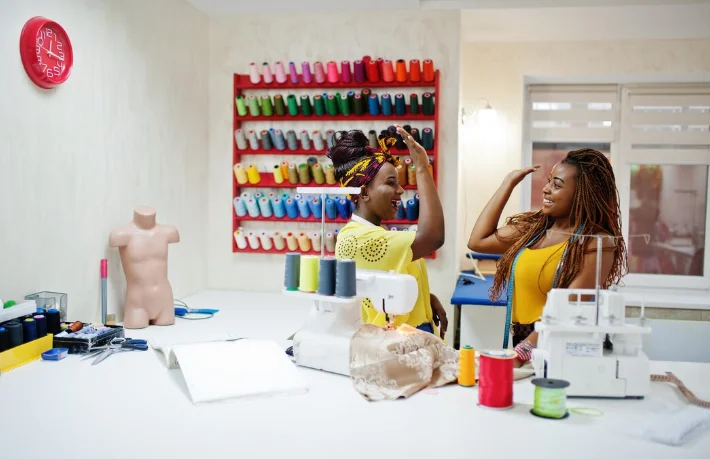
Fashion, Design and Textile Studies
Overview
Job Growth
N/A
Duration
N/A
Avg. Salary
N/A
Career Paths
N/A
Program Description
Fashion, Design and Textile Studies teaches you how clothing, fabrics, and visual style are created, produced, and communicated. You will study garment construction, pattern making, textile science, colour and surface design, fashion illustration, fashion history, and basic digital design tools. The program combines hands-on studio work with cultural and business ideas so you can create original clothes, understand Ghanaian and global textile traditions, and build a portfolio. Graduates can become fashion designers, textile designers, stylists, merchandisers, museum textile curators, art teachers, or creative directors, and can also start their own fashion businesses. This program helps you turn creativity into practical skills and career opportunities.
Aims & Objectives
Develop practical garment construction skills, demonstrated by producing at least three complete garments.
Master pattern drafting and alteration techniques to create custom-fit patterns and samples.
Understand textile properties and surface techniques, shown by designing and executing printed or dyed fabric samples.
Create a cohesive design portfolio of original sketches, technical flats, and photographs of finished work.
Apply digital design tools to produce fashion illustrations and technical specifications using industry software.
Why Choose This Program?
Hands-on creativity
You learn by making, from sketch to finished garment, so practical skills and creative ideas develop together.
Cultural relevance and heritage
Study Ghanaian textiles and craft traditions, giving you unique design perspectives valued locally and internationally.
Strong career and entrepreneurship paths
Skills lead to jobs in design, merchandising, styling, museum curation, teaching, or running your own label.
Industry connections and internships
Programs often link with local fashion houses, textile workshops, and cultural institutions for real-world experience.
Skills & Tools
Skills You'll Develop
Use Photoshop and Illustrator to create mood boards, technical flats, print designs, and polished portfolio images.
Draft, adjust, and sew patterns to produce well-fitting garments using manual and digital techniques.
Apply dyeing, printing, and embellishment methods such as batik, tie-dye, and screen printing for original fabrics.
Work with 3D CAD or simulation tools to prototype designs and communicate technical details to makers and clients.
Tools & Resources
Adobe Creative Suite (Photoshop, Illustrator, InDesign)
CLO 3D or similar 3D garment simulation software
Pattern-making software such as Gerber or Optitex
Challenges & Tips
Challenges
Balancing theory and practice, such as learning textile science alongside hands-on sewing.
Building a strong portfolio within limited class time.
Tips & Advice
Set a weekly schedule that divides time between reading and studio practice, and apply theory immediately in small experiments.
Prioritise quality over quantity. Focus on 4 to 6 well-finished pieces that show range and technical skill.
Video Guide
Frequently Asked Questions
Ready to Apply?
Find programs that match your grades and interests - even if you haven't written WASSCE yet
Loading.. Please wait.

Talk to a Professional
Join a mentorship session with real professionals working in your field of interest.
 Real industry professionals
 Small groups (10-15 students)
 Starting at GH₵ 15 per session