Sculpture
Overview
Job Growth
N/A
Duration
N/A
Avg. Salary
N/A
Career Paths
N/A
Program Description
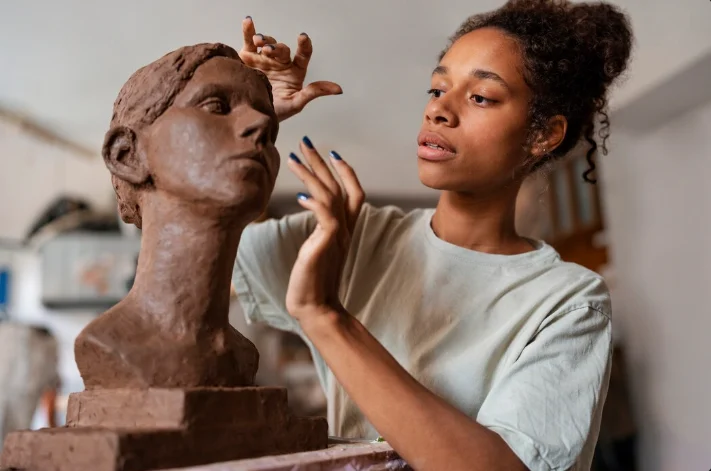
Sculpture explores three dimensional art making, combining practical craft with creative thinking and cultural study. Students learn techniques in modeling, carving, molding and finishing using materials such as clay, plaster, wood and metal. Courses cover art history, form and space, design principles, and project planning. You will make personal and group works, document your process, and build a portfolio for further study. Graduates can pursue careers as museum curators, art teachers, creative directors, writers or graphic designers, and work in galleries, cultural centres, media and education. This program encourages hands-on practice, cultural awareness, and self-expression, preparing you for creative jobs or further art study in Ghana and beyond.
Aims & Objectives
Develop practical skill in hand-sculpting and carving by completing at least six studio projects using clay, plaster, wood or stone.
Master basic mold-making and casting techniques to reproduce forms in plaster or resin with safe workshop practice.
Understand design principles, three dimensional composition, and the cultural history of sculpture through written assignments and project critiques.
Create a professional portfolio of finished works and process documentation suitable for applications to tertiary art programs or internships.
Why Choose This Program?
Hands-on creative training
You gain practical studio skills and real making experience, not only theory, preparing you for art careers and further study.
Strong cultural foundation
Study Ghanaian and global sculptural traditions, helping you connect contemporary practice with local heritage and storytelling.
Clear career pathways
Skills transfer to roles in teaching, curation, creative direction, media and design, making the program versatile in the job market.
Portfolio and industry links
Coursework focuses on building a portfolio, with opportunities to exhibit work and link with community studios, galleries, and internships.
Skills & Tools
Skills You'll Develop
Techniques in shaping clay, plaster, wood and soft stone for expressive and structural forms, including tool selection and safety.
Creating molds in silicone or plaster and casting replicas in plaster or resin, with an emphasis on surface treatment and finishing.
Understanding properties of common sculptural materials, joinery, adhesives, surface patination and conservation basics.
Using photography, image editing and introductory 3D modelling to document work and prepare digital portfolios, for example using Blender and Photoshop.
Tools & Resources
Adobe Photoshop (for documentation and portfolios)
Blender (basic 3D modelling and visualization)
Challenges & Tips
Challenges
Balancing theory and studio time
Tips & Advice
Create a weekly schedule that allocates focused studio hours, and link theoretical readings directly to your projects.
Video Guide
Frequently Asked Questions
Ready to Apply?
Find programs that match your grades and interests - even if you haven't written WASSCE yet
Loading.. Please wait.

Talk to a Professional
Join a mentorship session with real professionals working in your field of interest.
 Real industry professionals
 Small groups (10-15 students)
 Starting at GH₵ 15 per session